
Hear Our Voice
A libretto compiled from children’s Holocaust writings
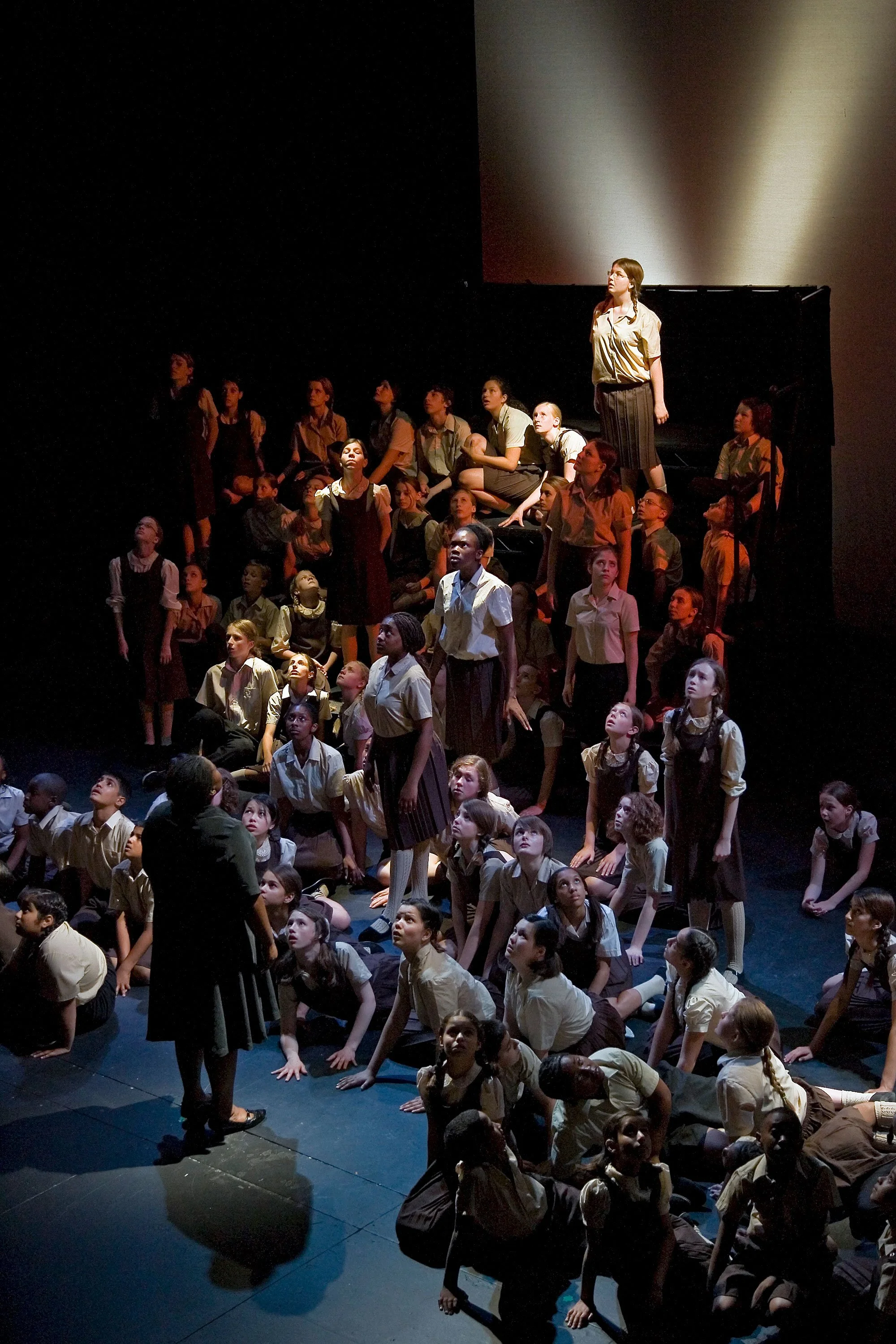
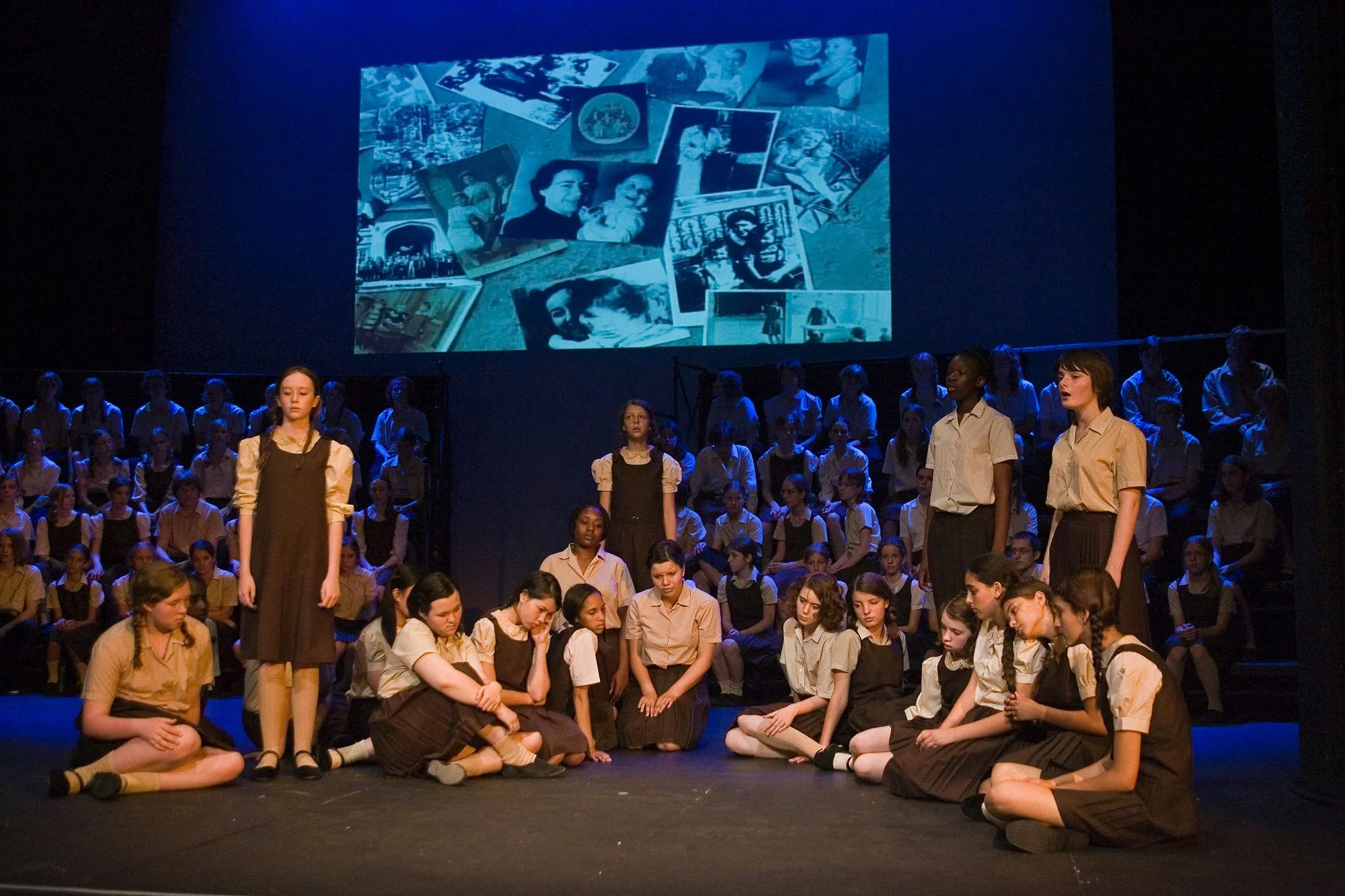
Hear Our Voice was an international project reflecting upon the holocaust through a music theatre work set to a libretto compiled by Tertia Sefton-Green from children’s Holocaust writings. Devised over 10 years through young people’s workshops led by Composer Jonathan Dove and Director Clare Whistler and mini pilot projects in partnership with Imperial War Museum, Farnham Maltings and The Riverhouse Barn in Walton on Thames, the large-scale international, full project brought together several components from autumn 2005, beginning with a new teachers’ resource pack written to teach the Holocaust through children’s writings, music, art and drama. Designed to increase young people's awareness and understanding of the dangers of prejudice and persecution, it gave them the tools to express their own feelings towards current issues of racial prejudice and intolerance.
Working with schools in London, Nürnberg and Prague in partnership with the Jewish Museum in Prague and the Nürnberg International Chamber Music Festival, HMDT Music’s project included visits to historic heritage sites and museums, and meeting with Holocaust survivors. With many of the score already created by Jonathan Dove, further workshops were led by composer Matthew King with a schools in Nürnberg after which which he arranged all the musical content into a fully orchestrated score in English, German and Czech. Over 500 students worked with a visual artist in each city to develop artwork using activities in the teachers’ pack as starting points. Life Is Red, exhibitions of student artwork from each city in each city, presented a creative response of today’s young people to the subject matter, offering a comparative viewpoint of how each nation responded to, addressed and dealt with the subject matter. Students in Prague also worked with Film Director Marta Hrubá to create a cinematic response to the libretto. They prepared a storybook based on their ideas and discussions about how, through film, they could express the feelings they imagined people must have had. Their final film formed the backdrop to the performances.
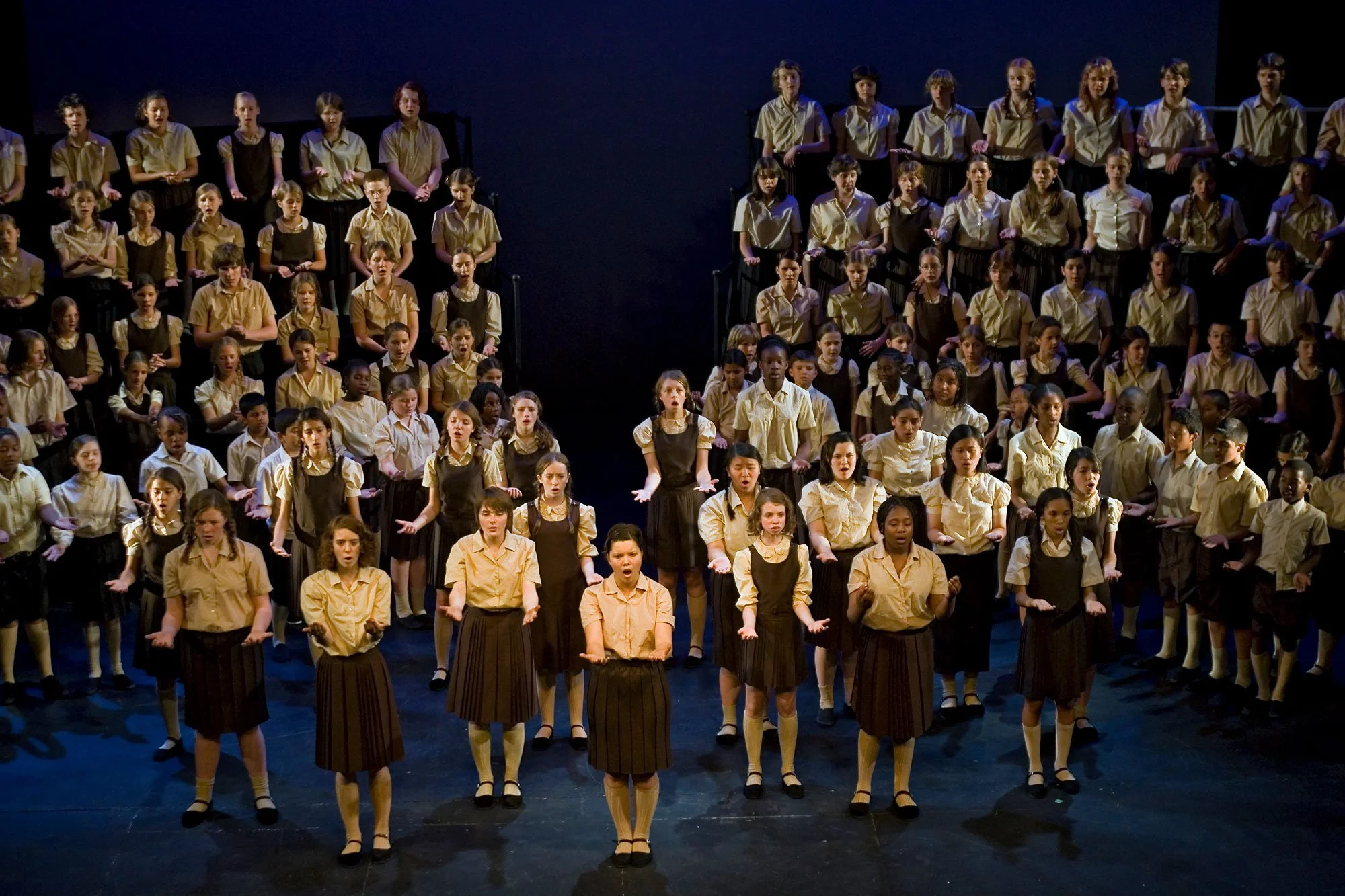
Students from 4 schools and a Czech choir rehearsed in their own cities with Director Clare Whistler and Music Director Peter Selwyn, coming together in July 2006 with The Fürther Streichhölzer Youth Orchestra and Soprano Alison Buchanan, to rehearse in London. The premiere of Hear Our Voice took place at The Bloomsbury Theatre on 15th July with the cast and crew of over 150 then setting off on an international tour on 17th July. Over the course of the week, the students had the opportunity to perform in each other’s countries, enjoy sharing their cultural heritage, and gain a deeper understanding of the Holocaust.
As a great tragedy of human conflict and a demonstration of prejudice and persecution unequalled in modern times, The Holocaust remains one of the most important historical lessons young people can study. Hear Our Voice lives on today, as we continue taking workshops into schools, offering young people the opportunity to empathise with the emotions of those who suffered by exploring the subject through the eyes of the children who experienced it and empowering them by sharing stories of hope amongst the tragedy.
#HolocaustMemorialDay #HearOurVoice #WeRemember #EducationThroughTheArts
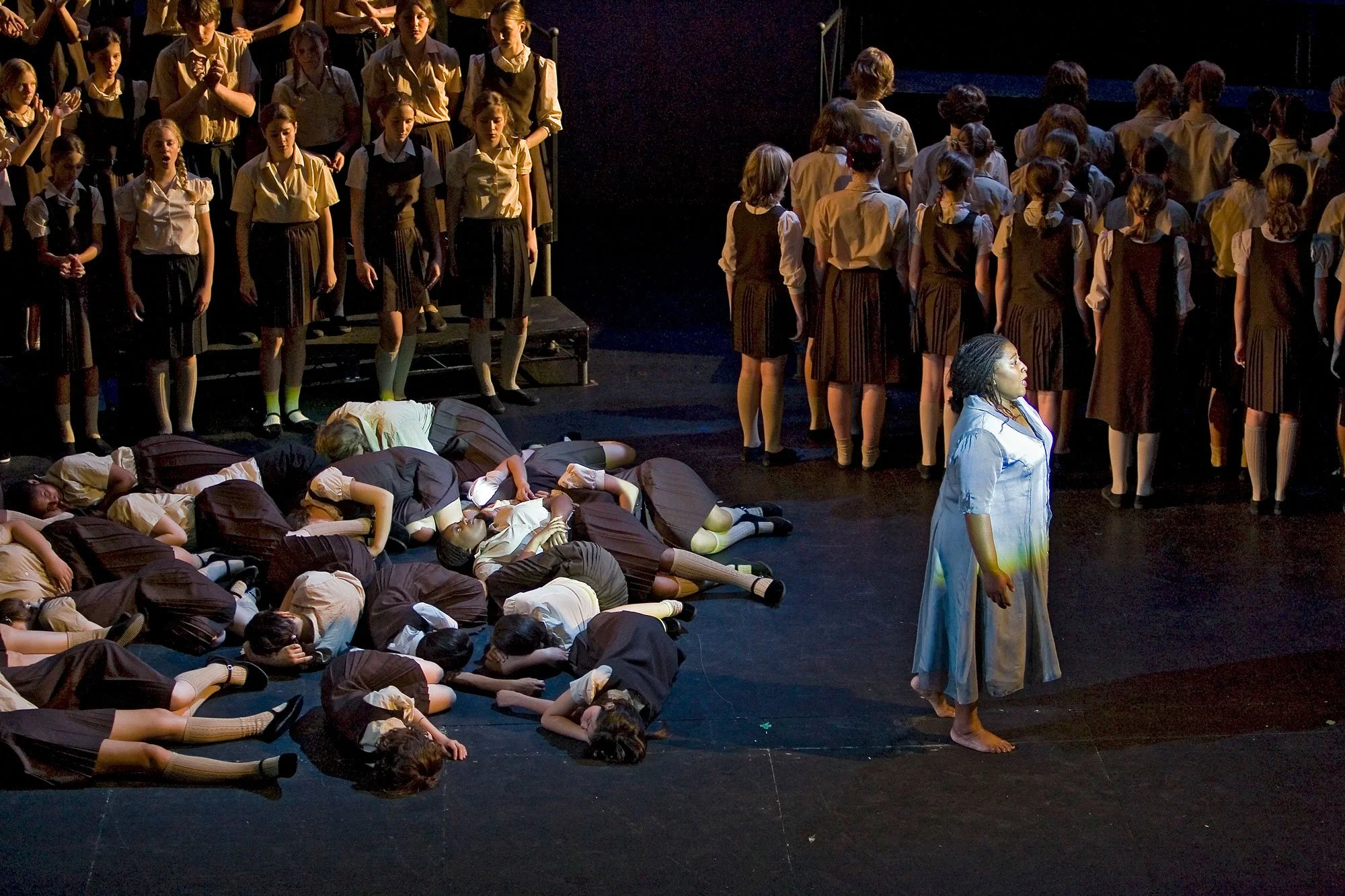
Photos: Clive Barda
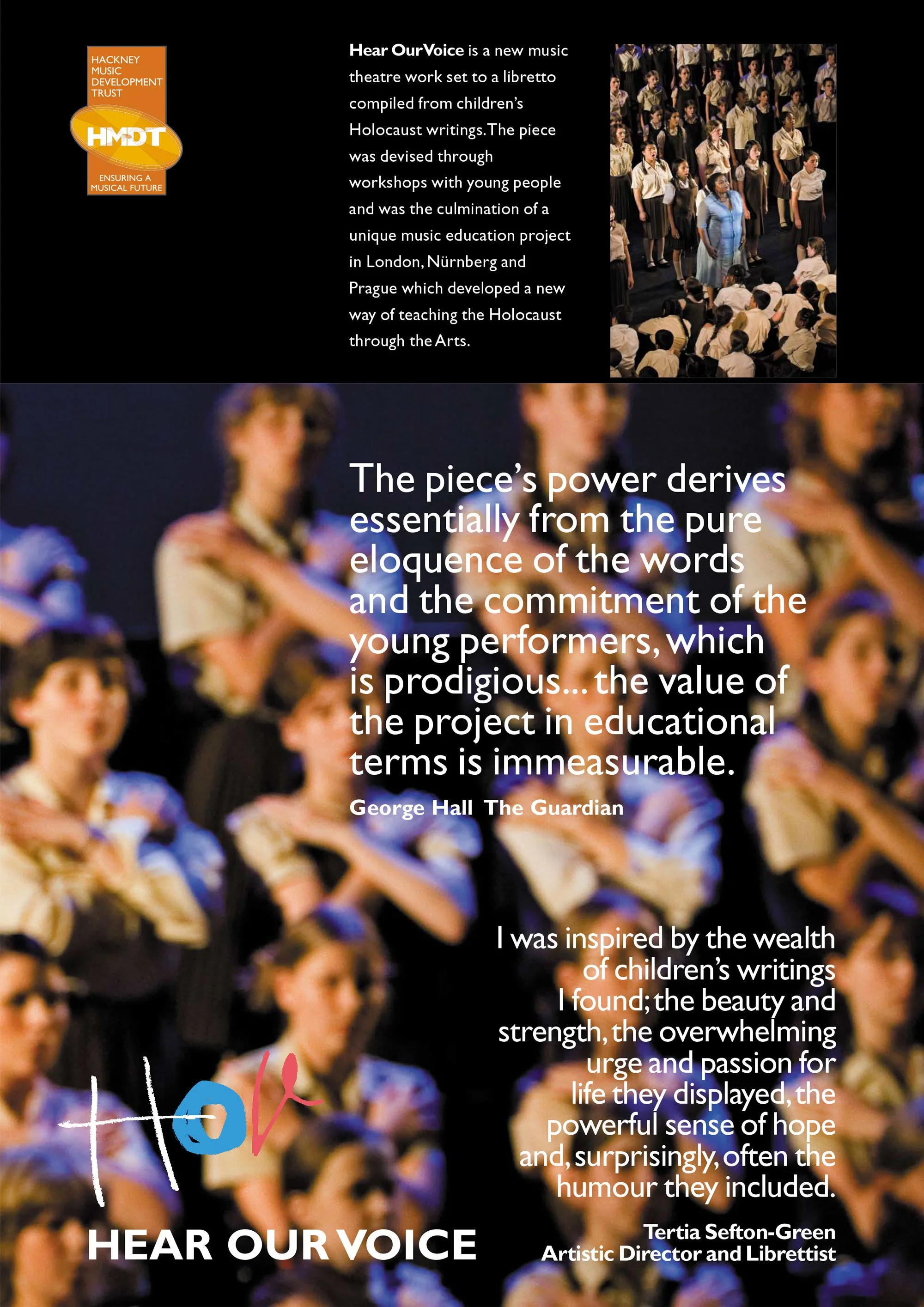
“I was inspired by the wealth of children’s writings I found; the beauty and strength, the overwhelming urge and passion for life they displayed, the powerful sense of hope and, surprisingly, often the humour they included. ”
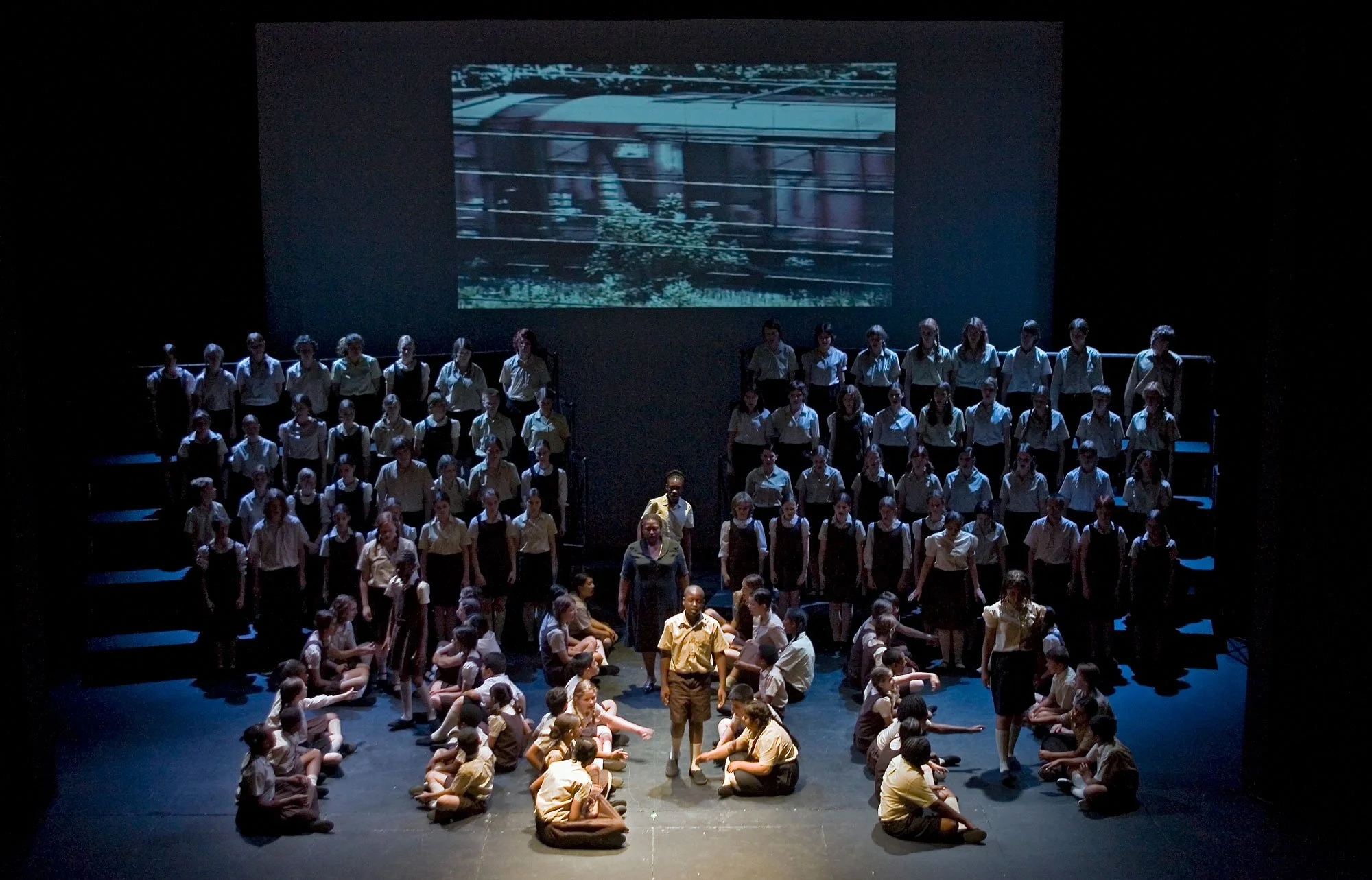
“The piece’s power derives essentially from the pure eloquence of the words and the commitment of the young performers, which is prodigious... the value of the project in educational terms is immeasurable.”
“The project has impacted on the children hugely. The opportunities have been really exceptional, which the vast majority of these children would absolutely not have experienced otherwise. The children matured considerably both in terms of the subject matter and in terms of the discipline required on stage... it was wonderful to plan and teach from the literature and resource materials provided which have made me think about the treatment of difficult subject matter with young children. ”
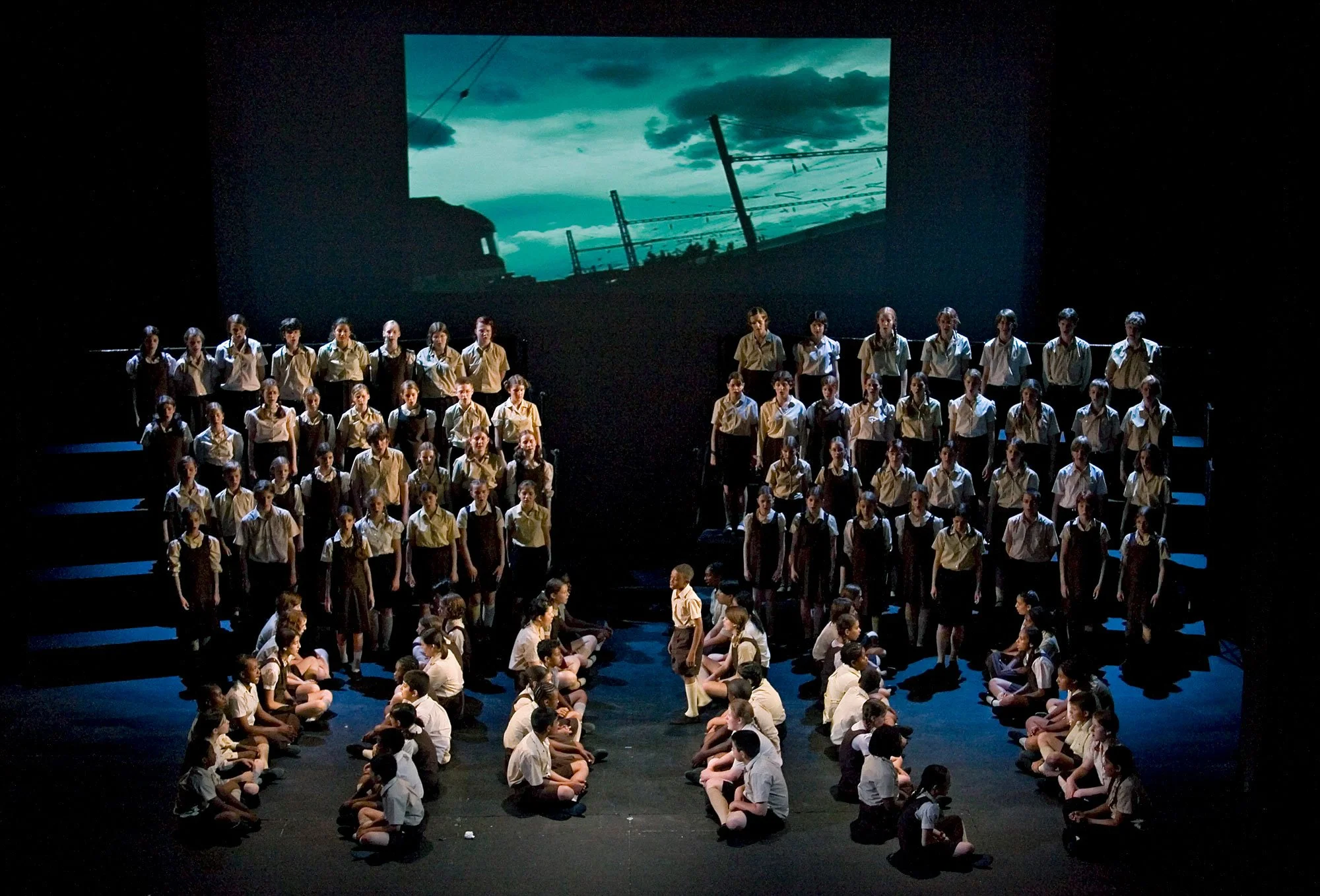
“Until Tertia came up with the idea of Hear Our Voice, I would have said that the Holocaust was simply too difficult and upsetting for primary school children to tackle in a creative music project. Hear Our Voice change that. The clear structure of the libretto, and the simplicity of the idea – of only using the writings of children – gave a focus to the vast amount of material, and offered an approach which was manageable both creatively and emotionally. ”
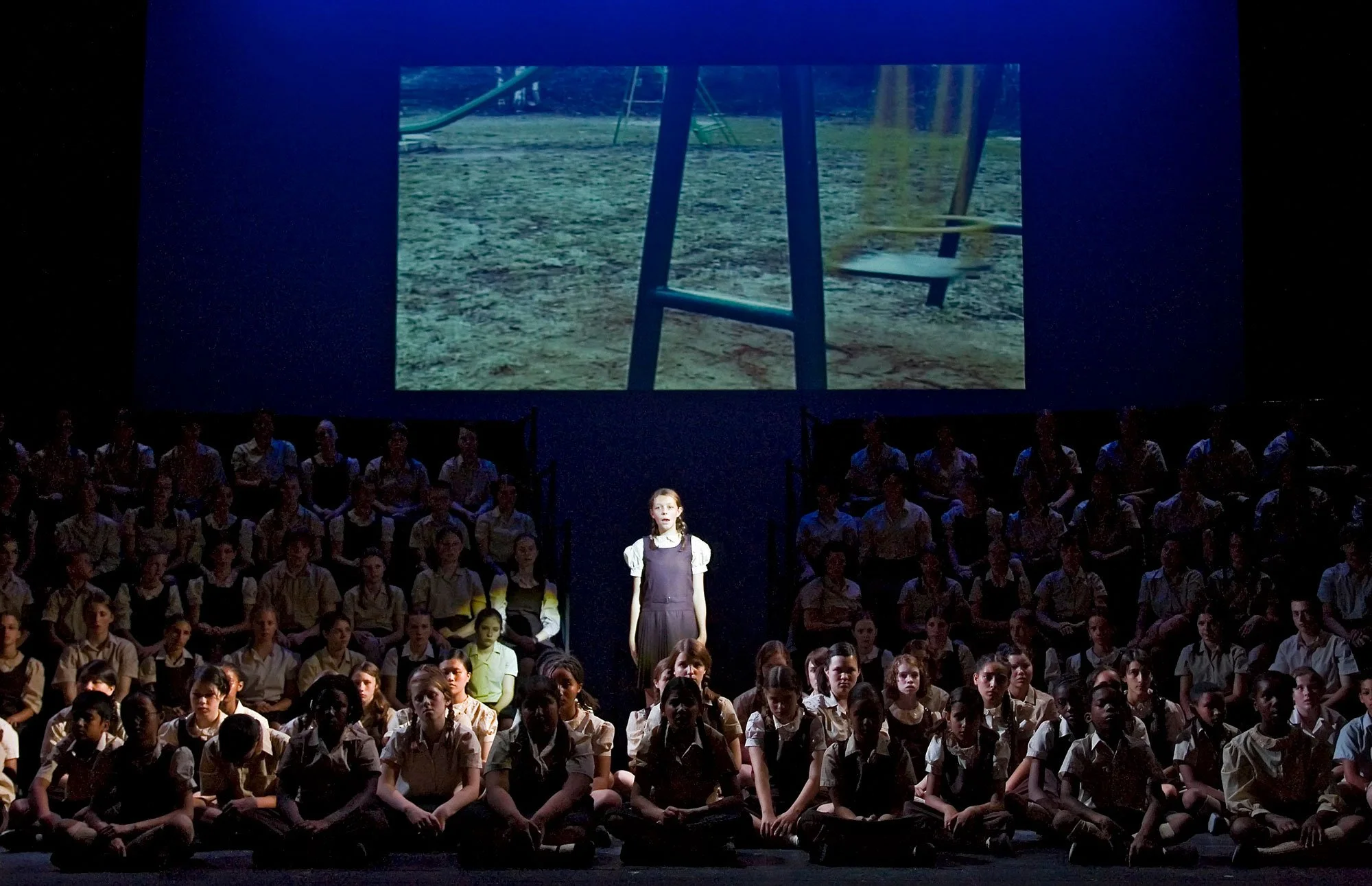
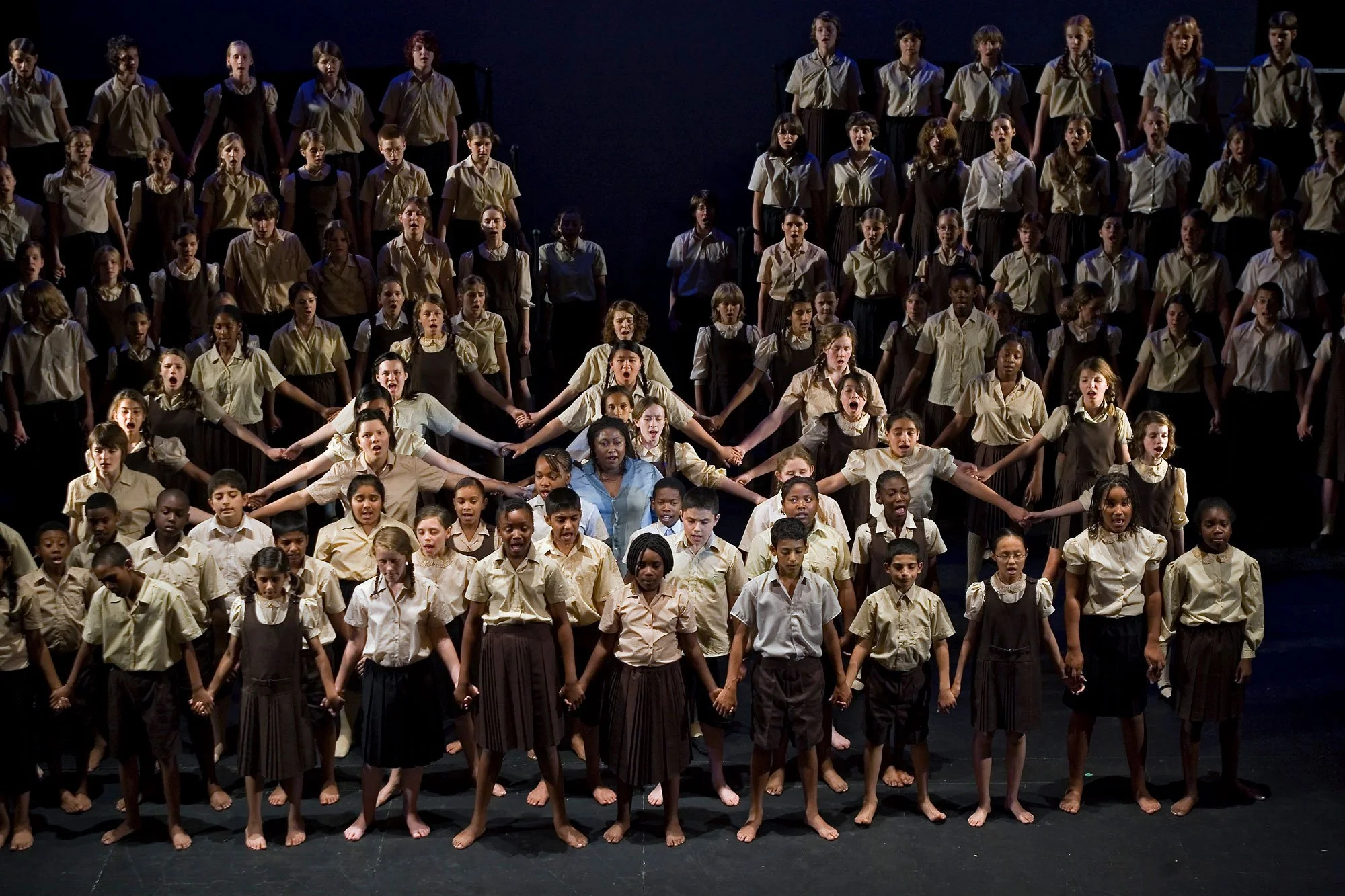
“What mattered most was the unselfconscious eagerness shown by every amateur singer or player, tiny child or senior citizen. ”
“Towards the end the children took their shoes off, and formed a long, hand-holding chain. They left the stage, and the final image was of the pile of empty shoes. There was a long, long silence. This project must have cost a lot of money, and there can be nothing but praise for those who raised it or gave it. Here was music not just saying, but doing something, being (as Britten put it) ‘useful’...”
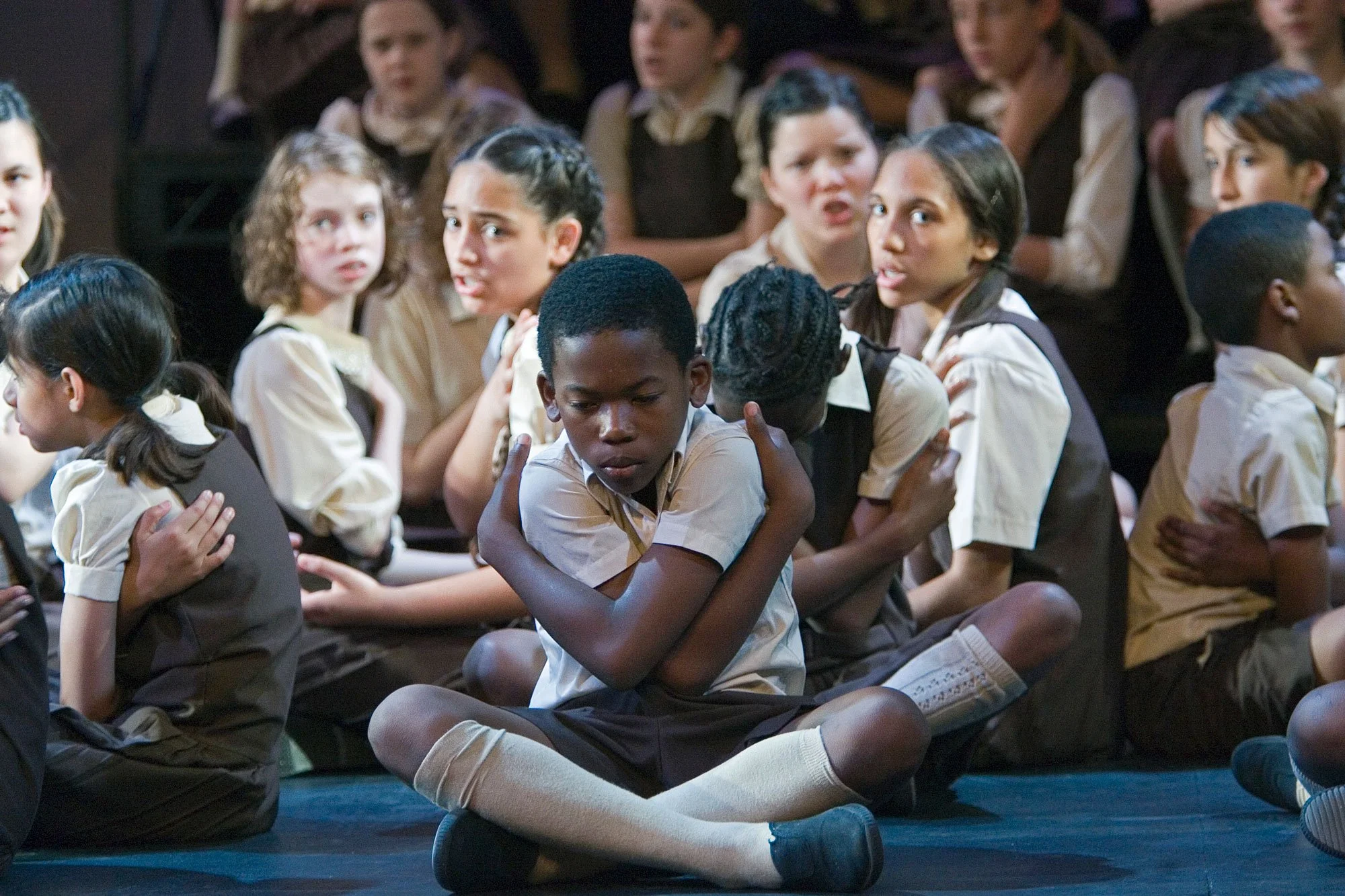
“My best thing was finding out I can actually speak up for the people who couldn’t. ”
“It taught me how to think through a child’s point of view about hope – about devastation. I would not have had any idea without Hear Our Voice. ”
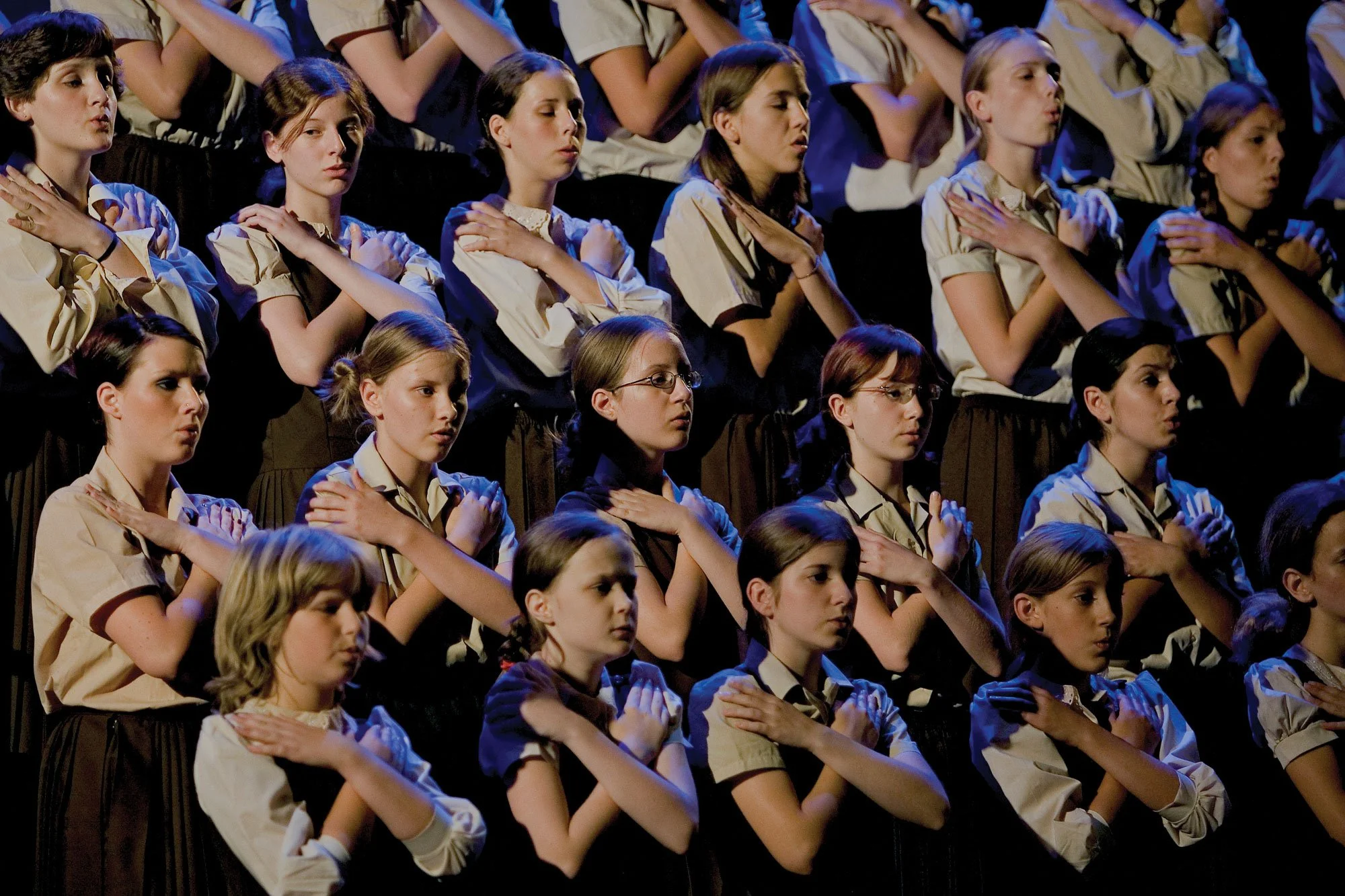
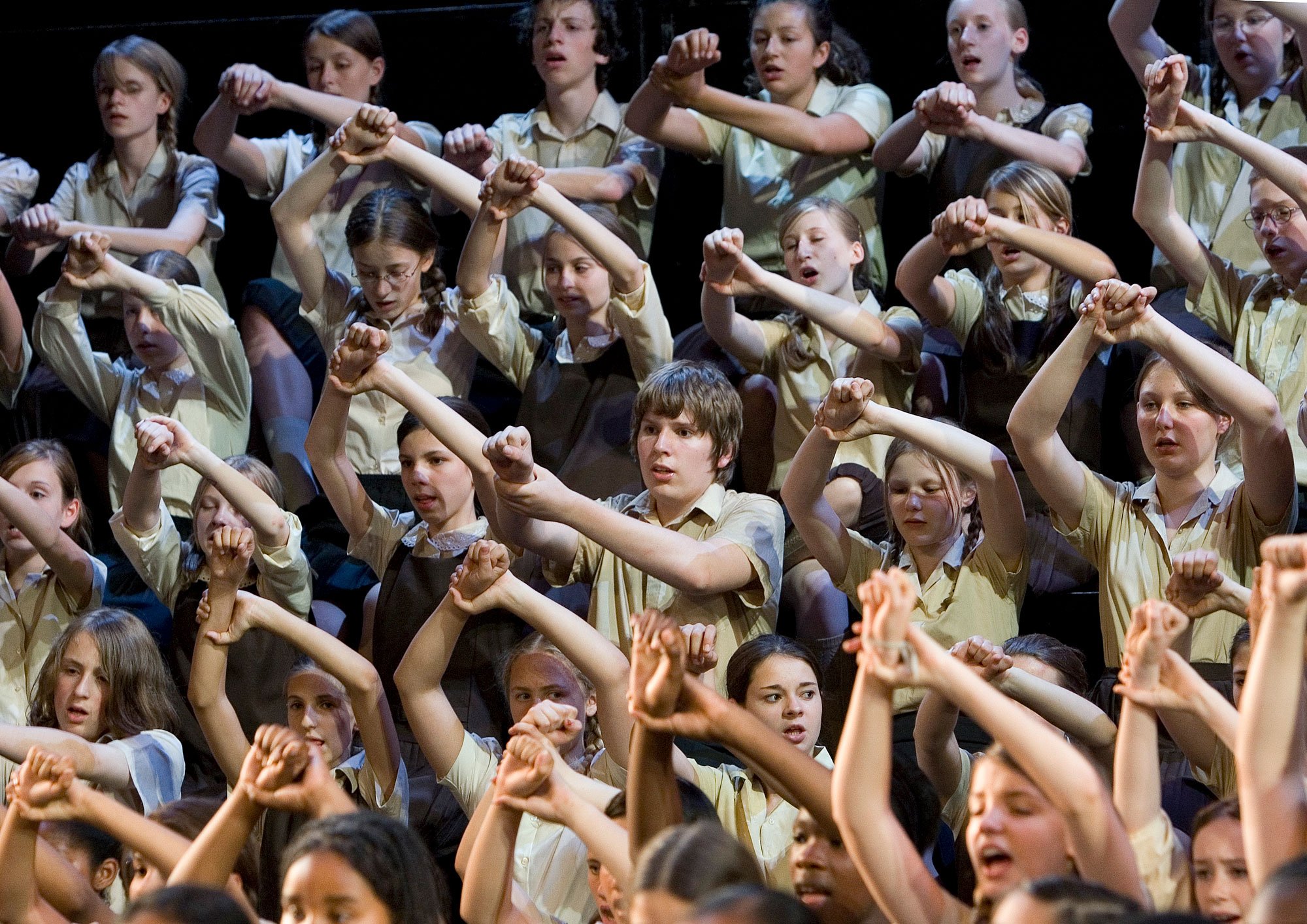
“ liked most the discussion with the Survivor. It was much better, more interesting and more understandable, than when we are only listening to facts in the history class. ”
“Workshops were also conducted in Nürnberg in order to set the German texts in an authentic manner... Fascinatingly, melodies that came from German workshops seemed strikingly different from English ones – more classical, more Schubertian even. ”
“I learnt much about the situation, the hope, the hurting…”
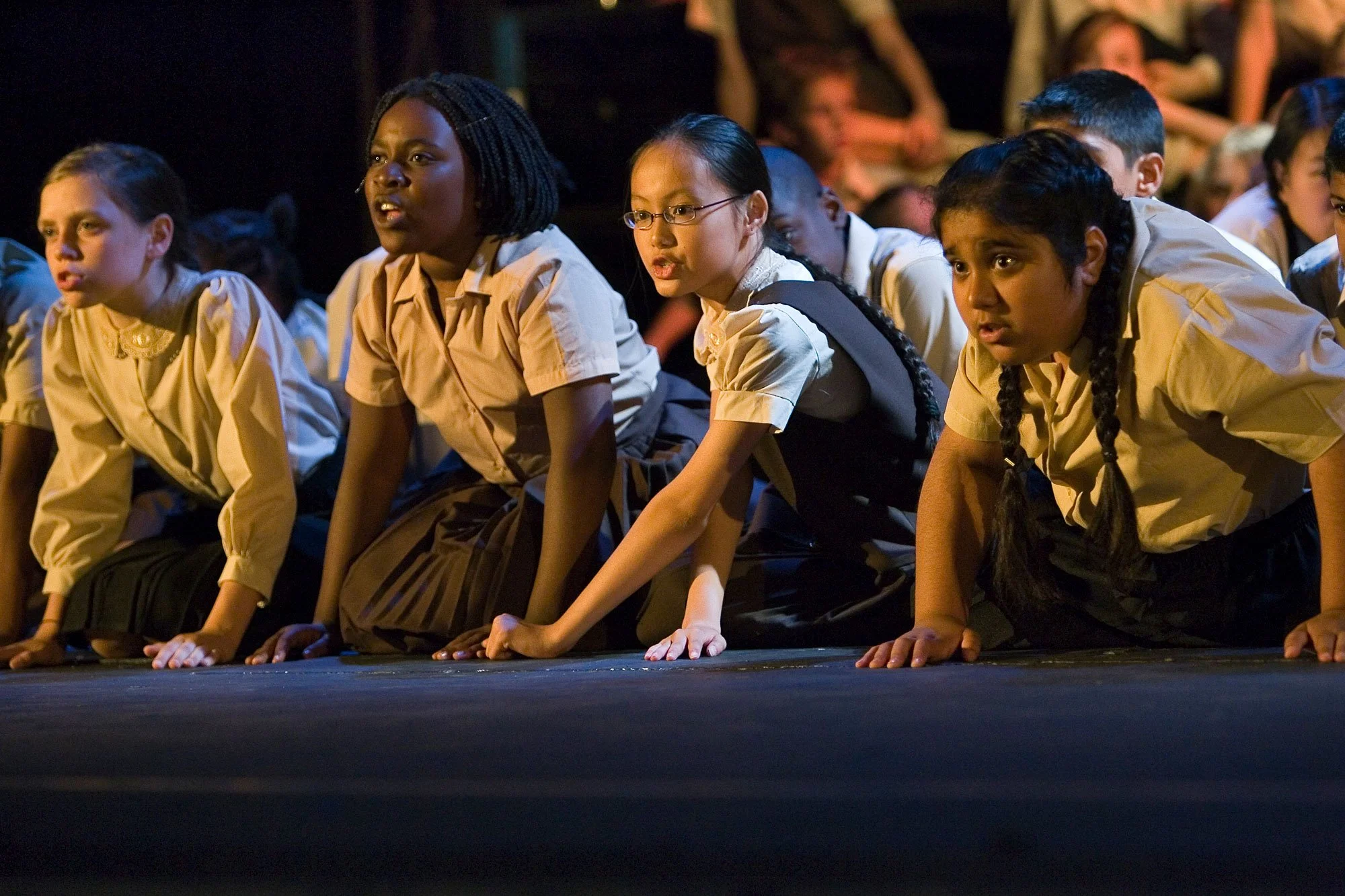
“Imagining helps you learn a lot because you can understand better than facts. ”
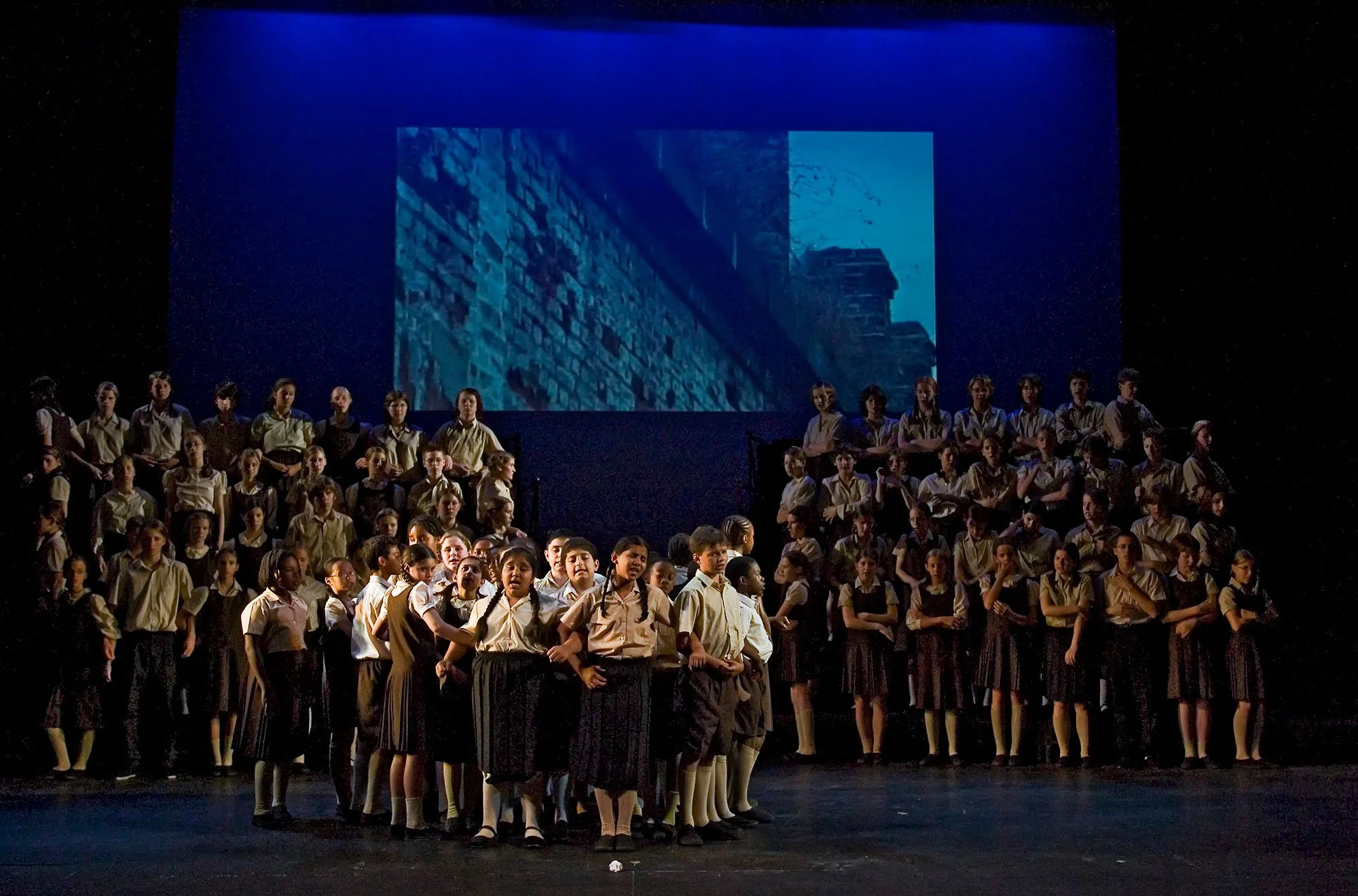
“The visit to Terezín made a very big impression on me. Now I understand more the life in a concentration camp. ”
“Expressive movement and vocal work enabled the performers to explore and inhabit the words still further, whilst bringing their own experiences and cultural identities to them. It was extraordinary to watch the intensity and emotional commitment, which each student invested, grow and develop.”
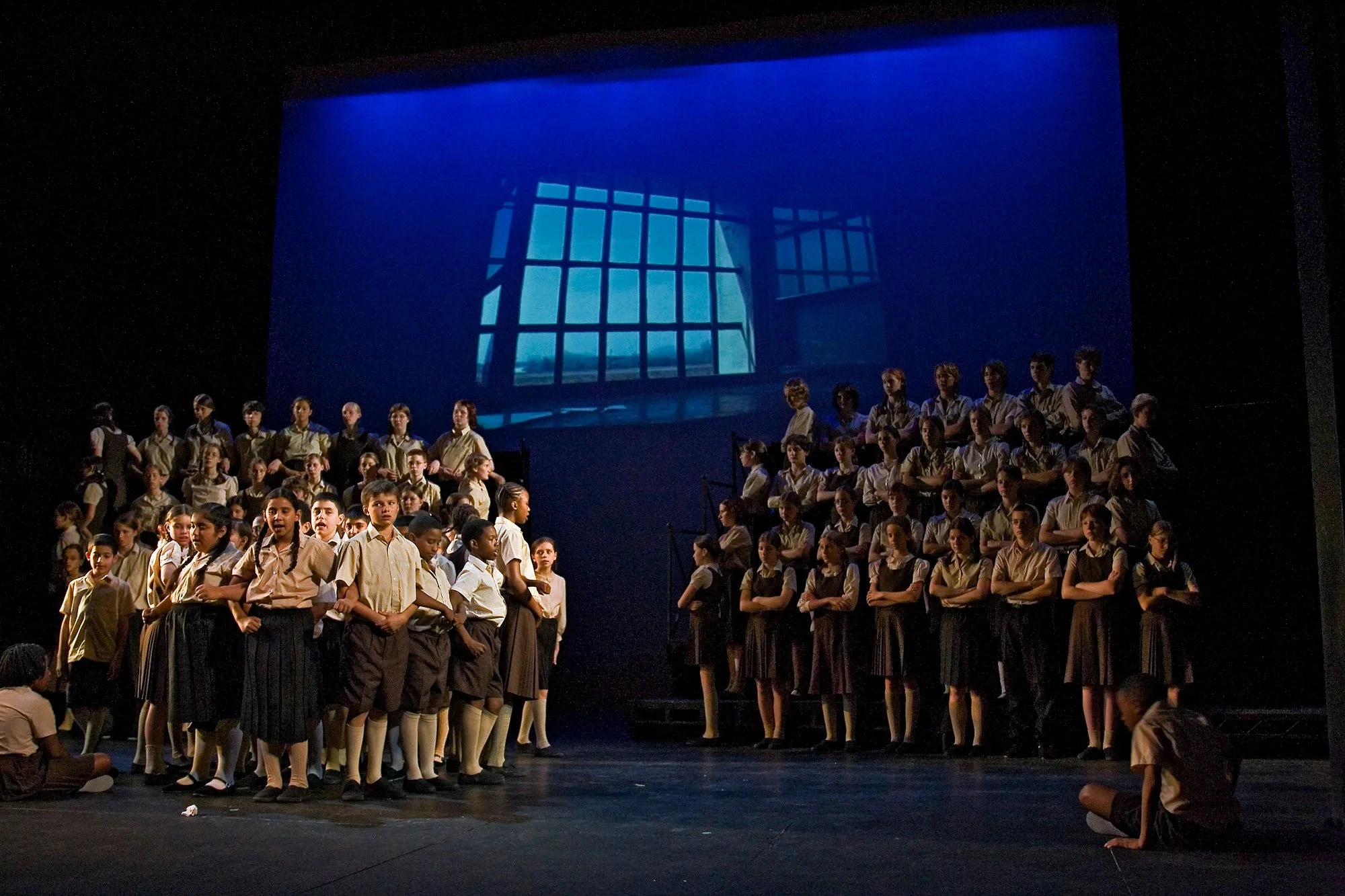
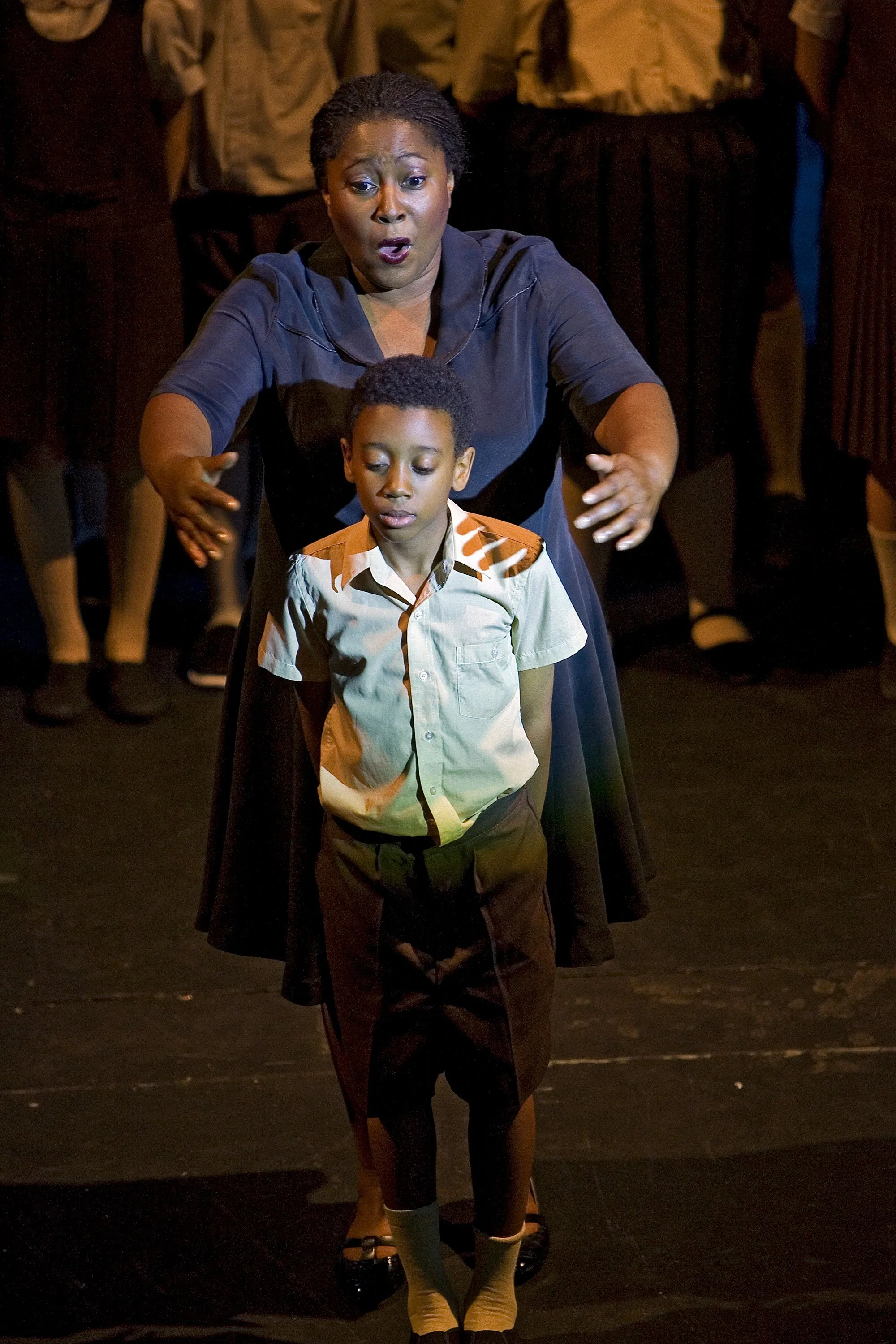
“I learnt that the words that you sing have deeper meanings. The way Clare made us think about the way poor children and their families were treated was really touching. By acting out their feelings by movement or expressions, I actually felt how they must have felt. ”
“I’ve been surprised by how some of the students have made great leaps in understanding and seem to have grown into deeper thinkers – much more focused. [They] really amazed me with their dedication… hopefully the children will take the strength of character they have gained and work to never allow persecution to happen again.”
“The current uncertainties of racial intolerance and persecution being faced by so many children across the world today serve to deepen my belief in this project, and it seems ever more important that the voices of the children of the Holocaust continue to be heard. ”
READ MORE
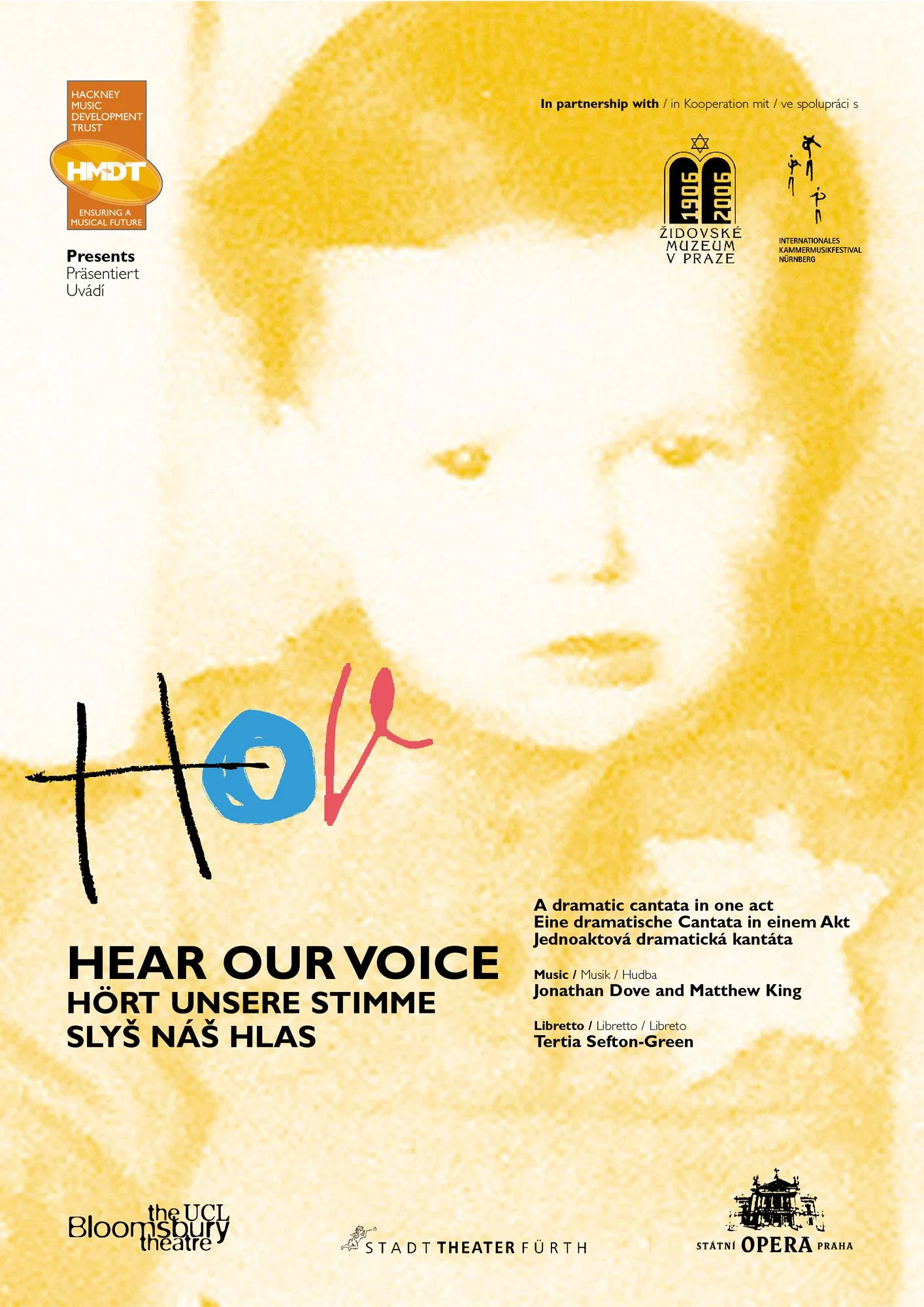
Hear Our Voice
Performance Programme
READ MORE
Hear Our Voice
Guide to the Project
ARTISTIC TEAM
Music
Jonathan Dove and Matthew King
Arranged and orchestrated by
Matthew King
Libretto
Tertia Sefton-Green
Compiled from children’s Holocaust writings
The Music for Hear Our Voice was created through workshops with students from:
Cleves School,Walton on Thames
Heathside School,Weybridge
Edmund Waller Primary School, Lewisham
Skinner’s Company’s School for Girls, Hackney
Farnham Youth Theatre
Jubilee Primary School, Hackney
Haggerston Girls’ School, Hackney
Die Jungen Fürther Streichhölzer
Labenwolf-Gymnasium, Nürnberg
Music Director
Peter Selwyn
Director
Clare Whistler
Film Director
Marta Hrubá
Costume Designer
Helen Lovett Johnson
Lighting Designer
Robin Carter
PERFORMERS
Survivor
Alison Buchanan
Students from:
Jubilee Primary School
Haggerston Girls’ School
Millfields Primary School London
Labenwolf-Gymnasium, Nürnberg
Slavíčci Choir Prague
Fürther Streichhölzer Youth Orchestra
FUNDERS
Education and Culture 2000
Arts Council England
Task Force for International Cooperation on Holocaust Education, Remembrance and Research
PRS Foundation for Music
The Harold Hyam Wingate Foundation
The Garfield Weston Foundation
The Morris Charitable Trust
RVW Trust
PARTNERS
Das Internationale KammermusikFestival Nürnberg
Židovské museum v Praze (ŽMP)
PRODUCTION TEAM
Production Manager
Charlotte Warner
Company Stage Manager
Ba Penney
Deputy Stage Manager
Laura Deards
Assistant Stage Managers
Georgina Bottomley
Tilly Stokes
Costumes
Menna Beynon